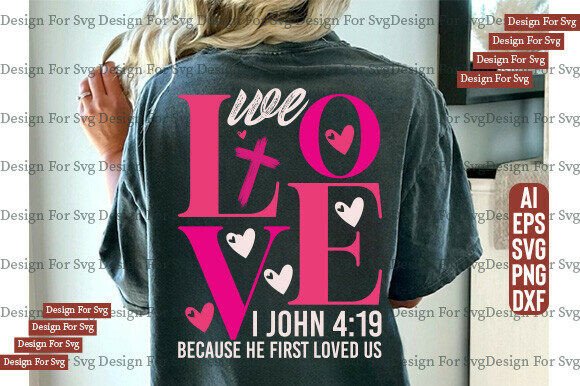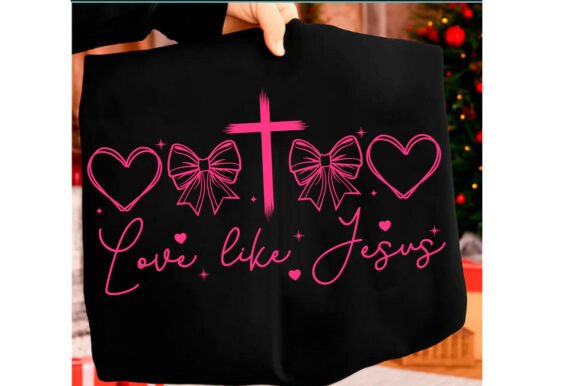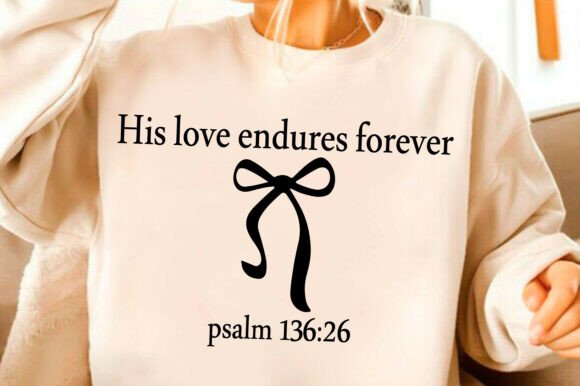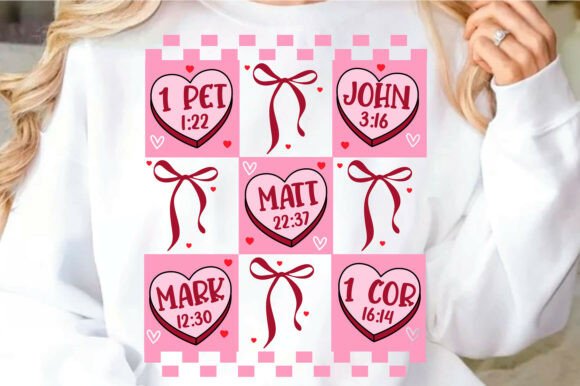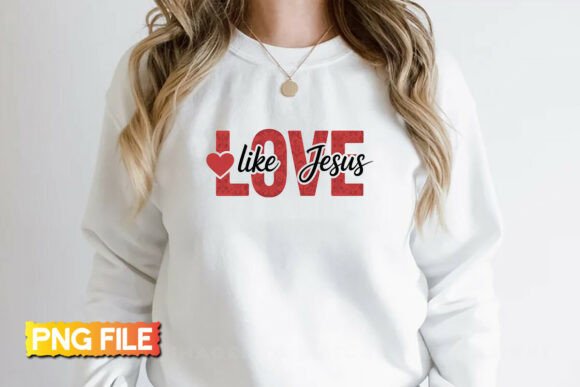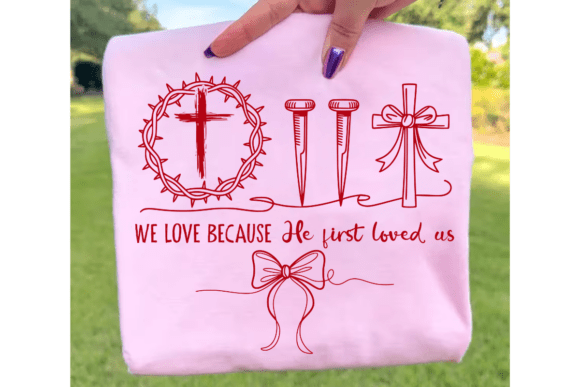
Christian Valentine He First Love Us SVG Graphics
A Brand Designer’s Real-World Review for Local Business Use
As a brand designer who’s developed visual identities for over 30 local businesses—from artisanal candle studios and family-run bakeries to women-led skincare brands and seasonal florists—I opened the Christian Valentine He First Love Us SVG file expecting sentiment, not substance. What I found was surprisingly versatile: a warm, reverent, gently ornamental typographic graphic that balances spiritual sincerity with soft modern design. It reads as handmade yet polished—neither overly decorative nor starkly minimal. The mood is tender, grounded, and quietly confident: ideal for brands rooted in care, community, and authenticity.
Fits Best With These Local Business Personalities
This graphic design asset naturally complements businesses where emotional resonance matters more than loud aesthetics. Think: a small-batch soap maker whose labels feature scripture-inspired affirmations; a coffee shop launching a “Love Local” Valentine’s campaign with heartwarming takeout cups and thank-you cards; a boutique carrying faith-forward apparel or gift boxes; or a children’s book publisher designing printable inserts for themed activity kits. It leans into organic, feminine, and heartfelt—not corporate, techy, or edgy. That makes it especially strong for handmade business branding where warmth and intentionality are part of the product promise.
Where It Adds Real Value Across Touchpoints
In my recent work with a downtown herbal tea brand, I tested the Christian Valentine He First Love Us SVG across six physical and digital applications—and saw consistent lift in perceived professionalism and emotional clarity:
- Packaging design: Used as a subtle foil-stamped accent on kraft tea box lids, it elevated shelf appeal without overwhelming the minimalist label layout.
- Product label: Scaled down and paired with a clean sans-serif body font, it anchored the back panel as a brand signature—reinforcing values without competing with ingredient lists.
- Social media graphics: Layered over soft linen textures in Instagram carousel posts, it became a recurring visual motif that strengthened visual hierarchy and encouraged saves/shares.
- Thank-you cards & hang tags: Printed on seeded paper, the SVG’s clean vector lines held crisp detail—even at 1.5” height—adding tangible sincerity to unboxing moments.
- Seasonal campaign visuals: Adapted into a Canva template for local florists and bakeries, it supported cohesive Valentine’s promotions across flyers, email headers, and window decals.
- Website banners & product mockups: Rendered in SVG format, it loaded instantly and scaled flawlessly across desktop, tablet, and mobile—no pixelation, no color shift.
Why It Strengthens Small Business Branding
For local business owners juggling production, sales, and storytelling, this graphic design asset delivers measurable advantages: it creates a stronger first impression by communicating care before a word is read; improves product recognition through consistent, emotionally resonant motifs; supports clearer visual hierarchy by acting as an intentional focal point; reinforces a cohesive brand identity across touchpoints; builds customer trust by signaling thoughtfulness in design execution; and delivers more polished marketing visuals—especially when layered thoughtfully with photography or hand-drawn elements.
Smart Usage Boundaries (What to Avoid)
While flexible, the Christian Valentine He First Love Us SVG isn’t universal. Avoid using it where precision, neutrality, or restraint is required: formal corporate branding (e.g., law firms or financial advisors), ultra-minimalist luxury packaging (where whitespace is strategic), ingredient-dense food labels where legibility is legally mandated, or legal disclaimers where decorative elements distract from required text. Also skip it on low-contrast backgrounds (e.g., light gray on white) or crowded layouts where its delicate line weight gets visually lost.
Practical Brand Designer Notes
Before integrating into your client’s or your own small business branding system, run these checks:
- Test it on real packaging mockups—not just digital previews—to assess scale, spacing, and tonal harmony with materials like kraft paper, matte laminate, or recycled cardstock.
- Check black-and-white usage: Does the design retain shape and impact when printed in single-color ink? (It does—thanks to balanced stroke weight and open letterforms.)
- Preview at 0.75” height on a product label—does it remain legible and graceful? (Yes—but avoid placing near fine-print regulatory text.)
- Test it with your brand’s full type palette: Does it pair well beside serif fonts (for elegance), sans serifs (for balance), script fonts (for contrast), or handwritten styles (for layered authenticity)?
- Confirm commercial licensing explicitly—this is essential for T-Shirt Designs, product packaging, and any physical goods sold publicly. Verify reuse rights cover both digital and print distribution.
- Inspect the SVG file for clean paths and editable layers—crucial if you plan to recolor, reposition, or integrate with other vector assets in Illustrator or Affinity Designer.
- Compare PNG transparency output: Does the alpha channel render cleanly against textured or gradient backgrounds in your web design or social media graphics?
- Review print quality on a calibrated proof printer—especially if using foil, embossing, or spot UV treatments in packaging design.
Final Thought: A Quietly Powerful Tool for Values-Driven Brands
The Christian Valentine He First Love Us SVG isn’t flashy—but that’s its strength. In a marketplace saturated with generic clipart and AI-generated fluff, it offers quiet craftsmanship and clear intent. For local business owners building something meaningful—a candle brand honoring slow living, a bakery celebrating community love, a handmade business rooted in faith—it’s more than a T-Shirt Designs download. It’s a ready-made piece of visual language that says, “We care deeply—and we designed this with you in mind.” When used intentionally, it becomes part of the story customers remember, not just the graphic they see.